Step 1
Detect
Every few meters of fiber acts as an independent acoustic sensor. Vibrations from footsteps, vehicles, digging, tapping or leaks are captured continuously along the entire route — not sampled at a handful of points.
Distributed Acoustic Sensing platform
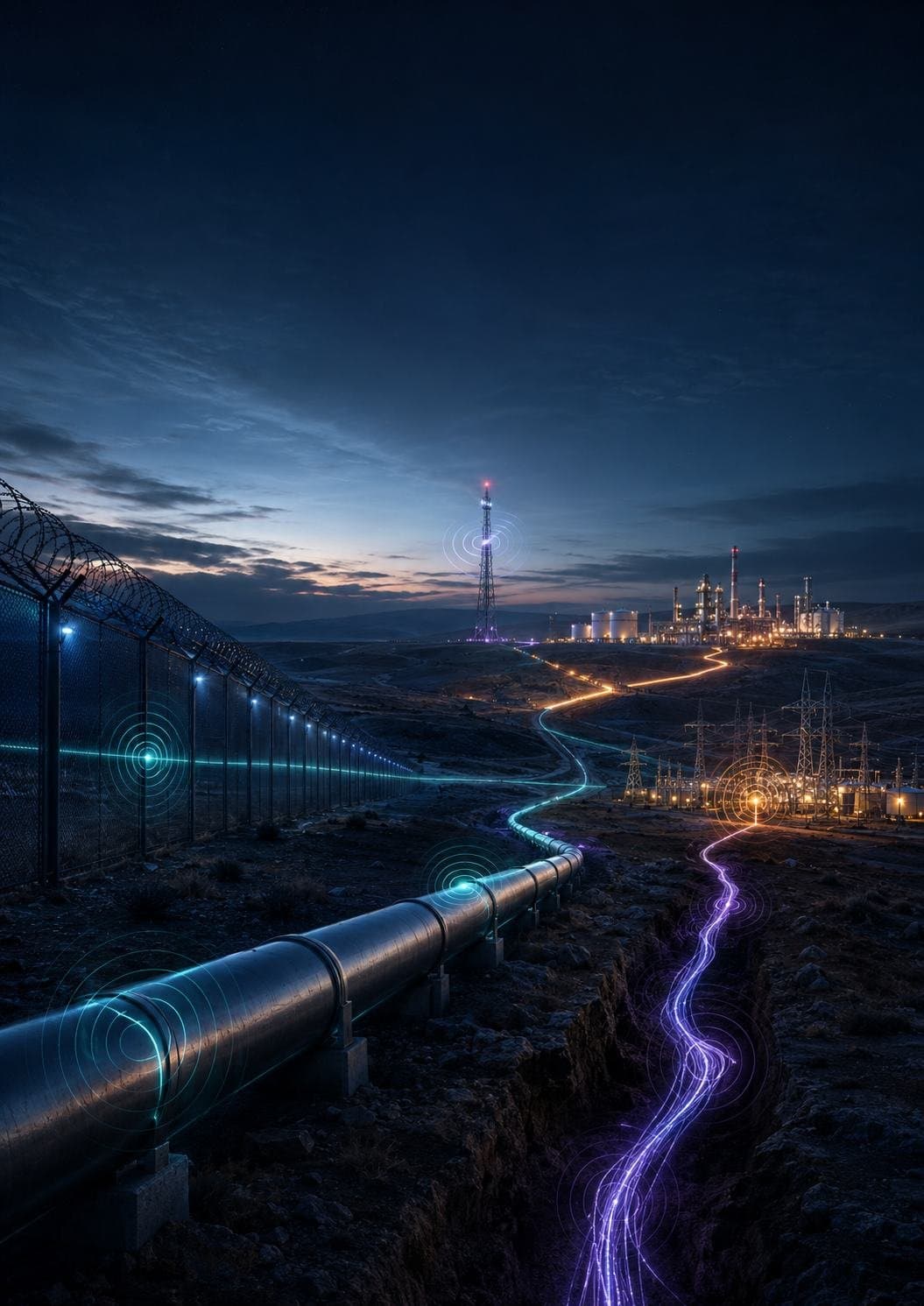
WolfSense turns existing or dedicated fiber-optic cable into a continuous, real-time sensor. It detects intrusion, excavation, leaks and tampering along pipelines, borders, telecom routes and industrial perimeters — and locates every event to within five meters, in under a second.
ISO 9001 & ISO 27001 certified · Built by Wolfiz Solutions
2013founded
100+employees
1000+projects delivered




The platform
WolfSense is a Distributed Acoustic Sensing platform built to safeguard critical infrastructure through continuous, real-time monitoring. It turns fiber-optic cable into an extensive sensing network that detects vibrations, intrusions, faults and leaks across long distances.
Every few meters of fiber acts as an independent acoustic sensor. Vibrations from footsteps, vehicles, digging, tapping or leaks are captured continuously along the entire route — not sampled at a handful of points.
Signal processing and AI classification separate real events from background noise, identify the event type, and place it on the map to within 5 meters, with an amplitude, SNR and confidence score attached.
Alerts reach the operator dashboard, command center, CCTV/VMS, SCADA or NMS in under a second — so response teams are dispatched to a precise location while the incident is still developing.
Route, zones and events on satellite imagery, a live event table and the DAS strain-rate waterfall — in one screen.
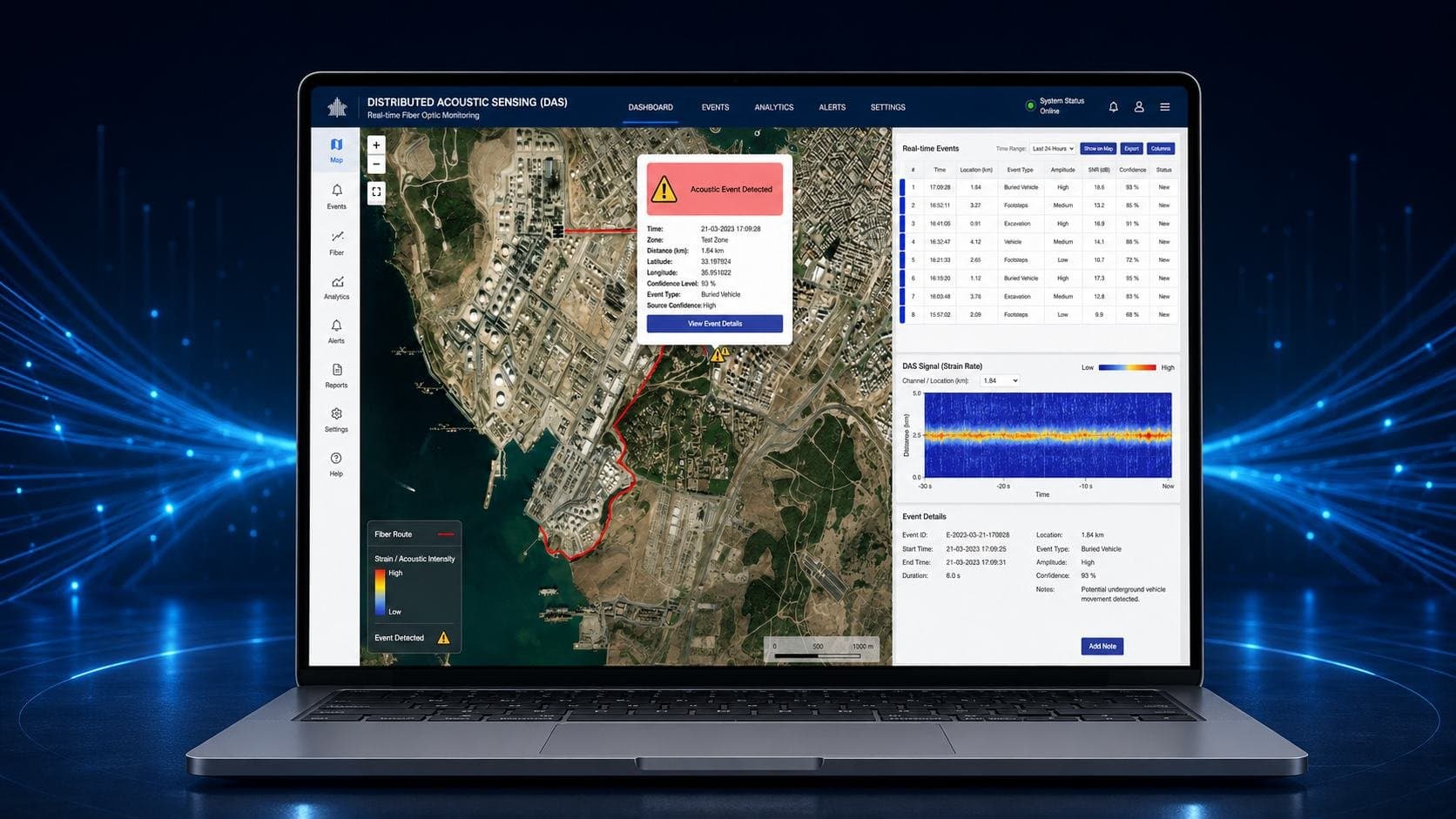
Map
Route, zones and event pins on satellite imagery
Events
Time, chainage, type, SNR and confidence
Signal
Live strain-rate waterfall per channel
How DAS works
Distributed Acoustic Sensing combines fiber-optic sensing with AI classification, geospatial visualization and remote monitoring, so operators can intervene before an incident becomes an outage, a breach or an environmental hazard.
1 · Light goes out
The interrogator launches short laser pulses into a standard single-mode fiber. Microscopic imperfections in the glass scatter a tiny fraction of that light back toward the source — Rayleigh backscatter. Vibration reaching the cable strains the fiber and shifts the phase of the returning light.
2 · Location and signature come back
By timing each return, WolfSense resolves where along the fiber the disturbance occurred; by tracking the phase change over successive pulses it recovers what it sounds like. Thousands of virtual microphones on one cable, with no powered electronics in the field.
Five properties that make a glass strand the right sensor for long, remote and hostile routes.
Passive in the field
No powered electronics along the route. The cable is the sensor; the interrogator sits safely in a rack.
Immune to electrical interference
Glass carries light, not current — unaffected by EMI, lightning or high-voltage environments.
Uses fiber you may already own
A spare core in an existing telecom or SCADA cable is usually enough. Dedicated cable can be installed where there is none.
Tens of kilometers per interrogator
A single WolfSense 99 covers up to 40 km; longer routes are chained into one unified view.
Works buried, on fences and in ducts
The same fiber and interrogator serve trench-buried pipelines, fence-mounted perimeters and cable ducts.
Every event follows the same five-stage pipeline, in under a second.
Step 1
Capture vibrations
Laser pulses travel down the fiber; the backscattered light carries the acoustic signature of everything touching the cable.
Step 2
Process signals
Returns are demodulated into a strain-rate stream for each sensing channel and filtered against the route's baseline noise.
Step 3
Identify events
AI models label each disturbance — footsteps, vehicle, excavation, leak — with a confidence score and reject nuisance sources.
Step 4
Map insights
Events are placed on the GIS map with zone, chainage, coordinates and a live waterfall of the signal.
Step 5
Trigger action
Alerts are pushed to operators, cameras are cued to the location and integrated systems receive the event in real time.
Solutions
The same interrogators and software adapt to the asset: fence-mounted fiber for perimeters, trench-buried cable for pipelines, the spare core of a telecom route, or the utility corridors of a power plant.
Solution 01
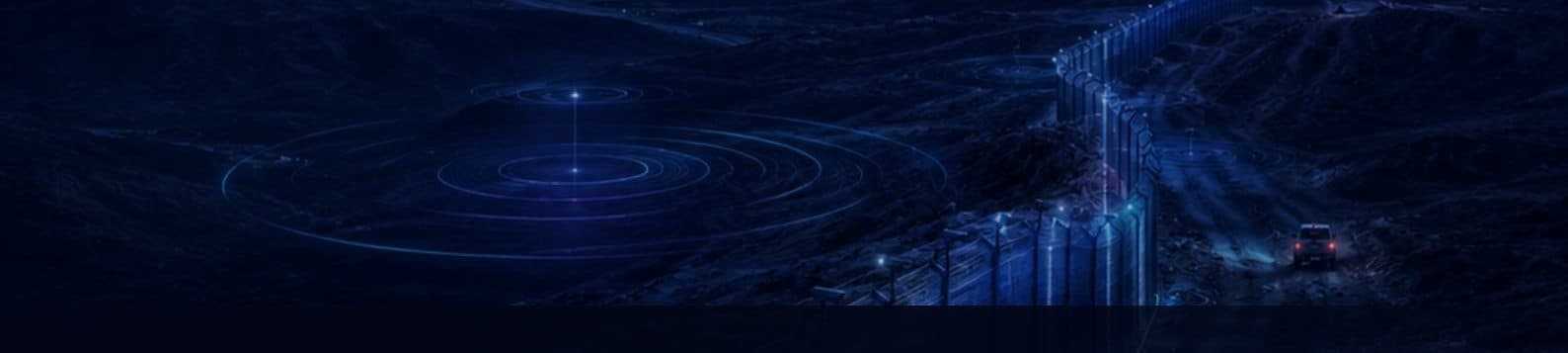
Borders & high-security perimeters
Manual patrols cannot cover every meter.
High-value sites require reliable monitoring that cannot be easily bypassed and does not depend only on manual patrols or conventional cameras. Perimeter threats occur in remote, low-visibility or high-risk locations where delayed detection leads to serious security consequences.
Solution 02
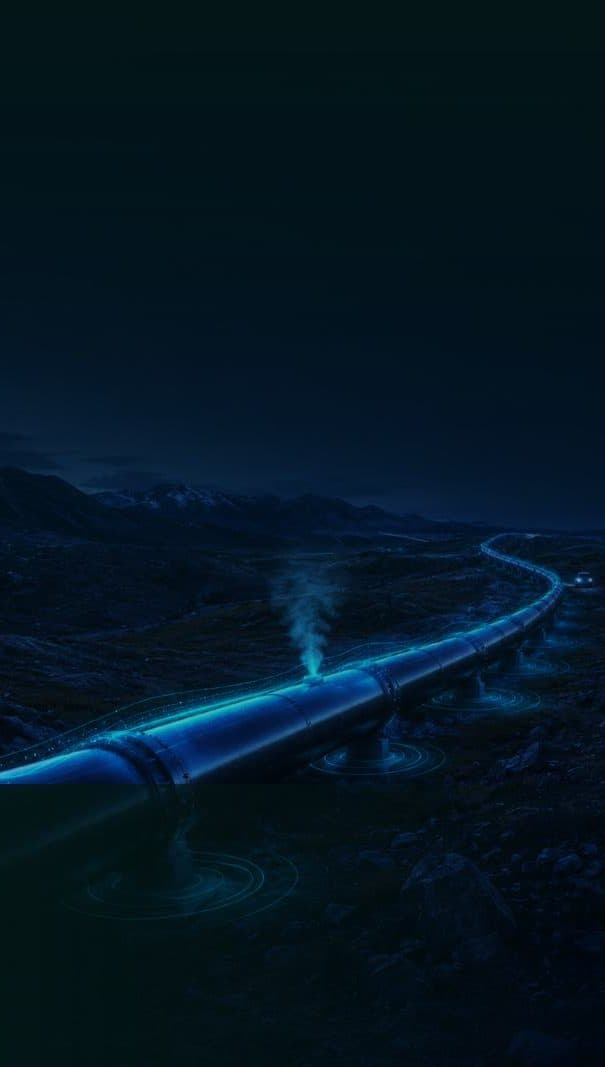
Oil, gas & water pipelines
Delayed visibility puts pipeline assets at risk.
Pipeline operators face increasing pressure to maintain asset reliability, prevent leakage, reduce environmental risk and protect long-distance routes from unauthorized interference. Traditional inspection methods provide delayed visibility and may not detect threats until damage has already occurred.

Solution 03
Telecom & fiber routes
Cable cuts cost more than repairs.
Telecom operators depend on reliable fiber infrastructure to maintain service continuity. Cable cuts, unauthorized digging, tampering, vandalism and route disturbances lead to network outages, customer impact and increased repair costs.
Solution 04
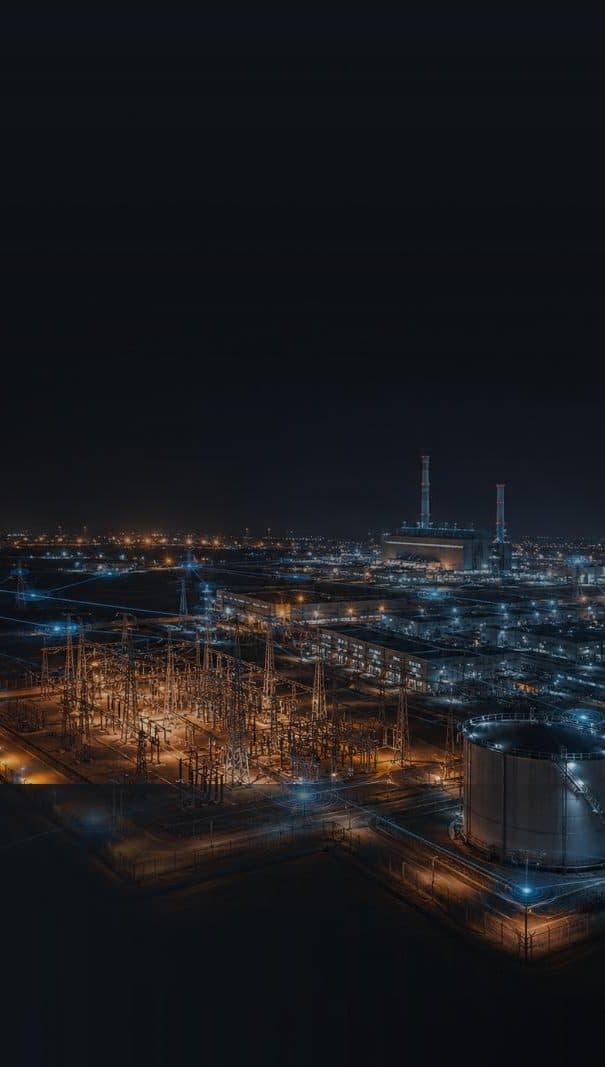
Power & industrial facilities
Large sites, dispersed assets, one command view.
WolfSense supports power plants, industrial sites, utilities and high-value facilities with continuous sensing for perimeter security, asset protection and operational awareness. Teams monitor large areas, detect abnormal activity and respond to potential threats from a centralized command view.
Unified operations
Pipelines, borders, telecom routes and industrial sites monitored by different interrogators report into one console — the same alert workflow, the same event record and the same integrations across the whole estate.
Unified Monitoring View
5 sites3 alerts todayLive
96 km fiber · 42 km pipeline · 18 km perimeter · 12 cameras · NMS + command center synced
Illustrative console layout. Site names, chainages and events shown are representative.
The outcomes teams actually measure once WolfSense is in service.
Products
Both units run the same WolfSense software and report into the same console. Choose by the length of the route and whether you need to interrogate in two directions at once.
Single-site perimeters, plants and shorter pipeline or fiber segments.
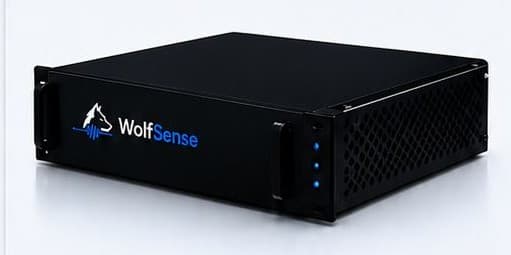
Long-haul pipelines, borders and telecom routes needing two-direction coverage.
Certifications
Quality management and information security, independently audited.
Technology partners
Sensing hardware and fiber expertise from established DAS manufacturers.
Capabilities
Detection is only useful if it survives contact with a real site: long distances, harsh environments, existing control rooms and the years after commissioning. Every WolfSense deployment is specified against these properties.
Remote access
Web console, anywhere
Security camera integration
Cue CCTV to the event
Redundancy
Fiber-cut immunity
Accuracy
5 meters
Future expansion
Add routes & channels
Response time
Less than a second
Sensitivity
User adjustable
SCADA integration
Events into your control room
Warranty
3 years
Detection range
Up to 40 km per unit
Post-commissioning support
SLA-backed
Unified operations
One view across sites
Deployment
A WolfSense deployment is delivered by Wolfiz engineers end to end — fiber assessment, interrogator commissioning, zone calibration, integration and support. Nothing is handed over until the alerts your operators see are the ones they need.
We walk the asset with you: existing cable, spare cores, splice points, chainage references and the threats each zone actually faces.
WolfSense 9 or 99 units are positioned at stations, substations or POPs to cover the route; dual-channel units interrogate in both directions.
The fiber is mapped to GIS coordinates, zones are defined, and sensitivity is tuned per zone against the site's real background noise.
Events are wired into CCTV/VMS, SCADA, NMS and the command center, with the alert workflow your operators already use.
Handover with training, remote access for support, a 3-year warranty and a post-commissioning SLA for the life of the system.
Integrations are part of the commissioning scope — not an afterthought.
About Wolfiz
Wolfiz delivers digital transformation leveraged with AI and BI, through custom web and mobile applications integrated with IoT and hardware equipment. WolfSense brings that practice — software, hardware and integration under one team — to fiber-optic sensing.
Headquartered in Islamabad, Wolfiz works with governments and large-scale enterprises on systems that run in the field: command centers, IoT integrations and hardware-backed platforms. WolfSense is one of the products that came out of that work.
FAQ
Straight answers on fiber, accuracy, range, integrations and support.
Yes. WolfSense works on standard single-mode fiber, and in most deployments a spare (dark) core in an existing telecom, SCADA or security cable is sufficient. Where no fiber exists along the asset, a dedicated sensing cable is installed — buried alongside a pipeline, mounted on a fence, or pulled through existing ducts.
The interrogator resolves the fiber into sensing channels of 5–10 m, and events are reported with an accuracy of 5 meters, expressed as chainage (distance along the fiber), zone and GPS coordinates on the map.
WolfSense 9 covers up to 20 km; WolfSense 99 covers up to 40 km with two simultaneous interrogation channels. Longer routes are covered by chaining units, and all of them report into the same unified monitoring view.
A cut is itself detected and located immediately — the interrogator sees exactly where the backscatter stops. With redundancy configured (for example a dual-channel WolfSense 99 interrogating from both ends of a loop), sensing continues on both sides of the break while the repair is dispatched.
It removes their blind spots. Cameras and patrols cover points; fiber covers every meter continuously. WolfSense integrates with CCTV/VMS so that when an event is detected, the nearest camera is cued to the exact location and the operator sees both at once.
Each detection is classified by AI models trained on the acoustic signatures of footsteps, vehicles, excavation, leaks and tampering, and is given a confidence score. Sensitivity is adjustable per zone, so a road crossing or a pump station can be tuned differently from a remote trench.
CCTV/VMS, SCADA, NMS and command-and-control platforms, plus remote access for operators and support engineers. Integrations are part of the commissioning scope, not an afterthought.
Every WolfSense deployment ships with a 3-year warranty and a post-commissioning SLA covering remote support, health monitoring of the interrogator and software updates.
Contact
Tell us about the asset and we will come back with a scoped proposal: fiber requirements, interrogator count and placement, integrations, and a commissioning plan.
2nd Floor, EOBI House, G-10,
Mauve Area, Islamabad, Pakistan
What happens next
We typically respond within one business day.